Thursday, November 7, 2013

Lectins and Leaky Gut Syndrome: Good Reason To Give Up Grains and Legumes or Just Another Exaggerated Food Fear?


I’m not a big fan of food fear-mongering or diet extremes, so when I see foods that can play a part in a healthy diet get thrown under the bus (usually for dubious reasons, at best), my skin bristles a little. Of late, I’ve been challenged with the assertion that whole grains and legumes should not be eaten for various reasons, one of those being that they contain anti-nutrients. What inevitably follows in these anti-grain and legume diatribes is that one particular anti-nutrient, lectin, is especially insidious and causes a condition called “leaky gut syndrome.” Consequently, the opinion is that lectin-containing foods such as whole grains and legumes should be avoided.

“Legumes = lectins = leaky gut = leaky brain. I’ll get my carbs and protein elsewhere.”

I shared this quote from an individual I encountered in another post, and I’ve included it again here because I think it’s the perfect example of the true fear and confusion that exists surrounding whole grain, legume, and lectin consumption. Not surprisingly, the individual quoted above closely adheres to the Paleo diet, and it has been my observation that much of the popular anti-grain and legume sentiments generate within this community, as well as in the general low-carbing crowd. These two dietary sects renounce grains and legumes (yet interestingly enough make Paleo Cupcakes and Primal Cookies on the weekend!), but I won’t expound upon the virtuous or faulty aspects of these diets in this post—as always, eat whatever diet suits your health best (though I can’t emphasize enough the value of true dietary balance, eating primarily whole and real foods, and aligning your intake with your caloric needs), but before you banish a food from your eating repertoire, be sure you have all the facts and aren’t eliminating something on unfounded fear.

So are lectin-containing foods such as whole grains and legumes as dangerous to our health as proponents of certain diets purport? Do they really cause the terrible-sounding leaky gut syndrome? While this post won’t be a completely comprehensive discussion of lectins (I do want you to read this, after all), my hope is that I can help provide factual information, clear up some confusion, and, with any luck, silence the hysteria.

What are lectins?

Lectins are carbohydrate-binding proteins found in most plants as well as in dairy. Plant lectins are most abundant in plant seeds but are also found in other tissues such as roots, leaves, bark, flowers, or bulbs. It has been surmised that lectins play a defensive role in plants by protecting the plant against attacks from microorganisms, pests, and insects. As an example of this mechanism, it has been noted that an infection or wounding of a plant increases lectin concentration. Within animals, lectins facilitate cell-to-cell contact, which, as will be discussed later, can prove both positive and negative.

Lectins are found in a wide range of commonly-consumed foods such as tomatoes, beans, peas, wheat germ, rice, corn, garlic, avocado, leek, cabbage, tea, parsley, oregano, spices, bean sprouts, carrots, green beans, white mushrooms, cantaloupe, cherries, raspberries, blackberries, and roasted peanuts. From this listing, it is clear that exposure to lectins is a frequent occurrence for most people.

What are lectins capable of doing in the body?

In high doses, lectins can indeed be toxic. Consider the fairly well-known example of red kidney beans, which can cause a type of “food poisoning” (with resultant vomiting, cramping, and diarrhea) if consumed in the raw state or if improperly prepared.

In animals injected with high levels of lectins, a variety of suboptimal health occurrences have been observed. For example, absorbed lectins can impact distant organs, promoting such conditions as pancreatic growth or atrophy of the thymus.

When given to experimental animals orally, high levels of lectins can interact with gastrointestinal mucosa, triggering acute GI distress symptoms (as in the case with raw red kidney beans), as well as other negative effects. Because lectins have a high resistance to proteolysis and are stable over a wide pH range, they can survive the acidic, enzyme-containing stomach and therefore make the entire journey from mouth to colon mostly intact and biologically active. This has been made clear with the finding of intact lectins in human feces.

Since lectins do survive digestion and are uniquely capable of binding to cell receptors on the gut wall and elsewhere, our bodies may produce antibodies to them or, on the other hand, may induce tolerance. If the body’s defenses do gear up to attack the “invading” substances, a more widespread immune response can result. This has led to speculation that lectins could be involved in autoimmune diseases such as type 1 diabetes or rheumatoid arthritis.

With a substantial proportion of the lectin molecule intact in the gut, lectins are able to bind to cells lining the digestive tract, which can lead to direct membrane damage or can indirectly affect intestinal bacterial flora. In the case of the former, the reaction between lectins and cell membranes is believed to alter cell function in one way or another, producing adverse effects. For instance, the binding of lectins to liver cells in diabetic rats appears to contribute to clumping, deformity, or permeability of cells.

Binding of lectins to gut epithelium can also lead to brush border disruption, perpetuating a reduced absorption of nutrients secondary to a decreased absorptive surface area.

There is also word floating around that lectins from legumes are causing obesity, by means of leptin (a hormone which regulates food intake and body weight) resistance; however, the only available information I found on this was one medical hypothesis presentation (not a study). 

Equally as important to point out when discussing lectin activity is that lectins may just as easily arrive in the gut intact and NOT bind to mucosa, in which case there is typically little or no harmful effect induced. What corresponding factors must be present for lectin-induced damage to occur is still not clear, though lectin studies with rodents done to date have provided some more insight.
 
It’s not clear in what circumstances ingested lectins cause damage

In experimental rodents, lectin activity and the potential for subsequent toxicity is influenced by the degree and type of bacterial growth in the intestine, and studies suggest that certain microorganisims in the gut may even be lectin-facilitating.

Another observation from a study of excised rat GI tract segments treated with lectins points to the idea that lectins may only prove toxic when GI tract cells have been exposed to prior mechanical stress, as lectins can potently block repair, thus increasing membrane disruption. 

As with most any dietary element, dose and context seem to make a huge difference in regards to lectins, and I feel it is crucial to insert a reminder here that the amount of lectin necessary to produce most of the adverse effects seen in rodent studies is significantly higher than the amount that would be consumed in a typical human diet.

The mechanistic factors which dictate the fate of ingested lectin are not completely understood. Whether lectins will cause harm may be dependent on the overall diet history and composition of the diet, as well as the condition of the gut flora, among other factors. Research is still ongoing to determine both the dose and the environment in which lectins produce unfavorable outcomes

Leaky gut syndrome and...lectins?

As alluded to in the introductory section, lectins in whole grains and legumes are often cited as being causative agents of a Loch Ness Monster-esque condition called leaky gut syndrome. Because fear of developing leaky gut syndrome often lends itself to the avoidance of whole grains and legumes, I thought it would be wise to dig into what we know about the leaky gut syndrome phenomenon and separate the fact from the flimsy extrapolation.

What is leaky gut syndrome? While not officially recognized yet in the medical community, leaky gut syndrome is said to encompass a wide range of symptoms including gas, bloating, sensitivities to foods, cramps, skin conditions (eczema, hives, psoriasis), as well as aches and pains. Additionally, leaky gut syndrome has been blamed for a variety of disorders including chronic fatigue syndrome, fibromyalgia, allergies, and depression. It isn’t clear how many people claim to have this condition.

In reality, leaky gut syndrome is still a medical mystery—a very gray area—to doctors, who ascertain that presentation of leaky gut syndrome symptoms usually indicates that there is another diagnosis that needs to be made.

What causes leaky gut syndrome? The proposed theory is that increased intestinal permeability secondary to damage of the intestinal lining, leads to this condition. It is further surmised that a compromised intestinal barrier then lends noxious contents (bacteria, incompletely digested proteins, etc) access to various internal sites and circulation, potentially triggering an autoimmune reaction.

As might be expected, lectins are often too easily implicated by some as causing leaky gut syndrome, since they do have the ability in some cases to cause intestinal damage; however, this allegation of cause-and-effect is merely inference and has not been proven.
 
Even in more well-known disease conditions such as inflammatory bowel disease (IBD), Crohn’s disease, celiac disease, and irritable bowel syndrome (IBS), the question remains as to whether a compromised intestinal barrier is part of the cause of disease, or is the resulting effect. To date, studies investigating associations between a leaky gut and certain disease states have only been correlative.

Since both human and mouse studies indicate that intestinal barrier loss alone, regardless of cause, does not necessitate disease in otherwise healthy people, it’s not certain what could or should be done with someone who presents with increased intestinal permeability in the absence of other diseases such as IBD or Crohn’s disease. Also, it’s pertinent to point out that all intestinal permeability is not bad, as permeability confers functions such as supporting nutrient and water absorption. 

As of right now, evidence for how to best medically treat leaky gut syndrome is not there—so be warned of anyone who professes to have such an answer. Some alternative medicine practitioners claim that restoring gut barriers will cure underlying disease, but this has not been proven in clinical studies. Additionally, some of these same practitioners are recommending unsubstantiated dietary supplements to cure leaky gut syndrome, so hang on tightly to your wallet.

Now, if symptoms ascribed to leaky gut syndrome are, in fact, being caused by Crohn’s or celiac disease, for example, treating these conditions should resolve the issue. Of course, it is important to consult with your physician—digestive disorders are no joke, and appropriate treatment often resides outside of mere diet modifications.

Should you be concerned about lectins from normal consumption?

The lectins consumed in normal human diets do not seem to be harmful. As evidenced by the many people who eat and tolerate them, the majority of lectins ingested by humans appear to reach the gut without provocation, or if they do interact, do so in a harmless or even beneficial way. As previously mentioned, much of the research done with lectins involves artificially high doses, which do not correspond to typical human intakes. More research is needed to determine what effect lectins have at normally-consumed levels in the human diet, as there have been zero long-term studies in healthy individuals examining the effects of this.

Moreover, while there’s a lot of noise about the potential downsides of lectins, they can be beneficial, too. The body uses lectins for cell-to-cell adherence, inflammatory modulation, and programmed cell death. There may also be supplementary advantageous uses for lectins at non-toxic doses, with research being carried out in the areas of gut regrowth following total parenteral nutrition as well as in anti-cancer therapies.

Additional thoughts and tips before we conclude

Since the following assertion is inescapable in discussions pertaining to eating whole grains and legumes, lectins, and leaky gut syndrome, I might as well throw in my two cents now. I’m pretty sure some of you are thinking, “But we weren’t meant to eat grains or legumes! The toxins and anti-nutrients they contain are proof that they don’t WANT to be eaten!” From an evolutionary standpoint, we may very well not yet be fully adapted to eating grains and legumes. Keep in mind that at some point, humans weren’t adapted to (and many still aren’t) drinking lactose-containing milk from other mammals, but that doesn’t make milk a non-nutritious food that definitively needs to be avoided. 

Furthermore, it’s my view that we weren’t “meant” to do a lot of things that we do today (were you meant to be reading this post on your iPhone in an airplane at 50,000 feet above the earth? was the human body meant to sit on its butt at a desk job everyday? were we meant to eat fatty grain-fed feedlot meat? were people living in the northern latitudes of Minnesota meant to be slathering coconut oil on every morsel of food that touches their lips?), yet we do, because we now live in 2013, not in the Paleolithic era

And as for grains and legumes not wanting to be eaten—please show me an animal that wants to be eaten and maybe I’ll reconsider that argument. Anyway, my take here is that we have these food sources available, they can be a nutritious part of a healthy diet, and are enjoyable to eat, so why not?

Additionally, what Paleo diet proponents and others who shun grains and legumes frequently overlook is the fact that traditional processing of these foods greatly reduce or eliminate lectins. Soaking, fermenting, sprouting, and cooking grains and legumes are all techniques that will deactivate, thereby decreasing, lectins. While fermentation and sprouting generally destroy lectins more efficiently, the two most common techniques for whole grain and legume processing, soaking followed by cooking, will also degrade a good proportion of lectins. Raw red kidney beans can contain up to 70,000 lectin (hemagglutinating) units but through overnight soaking and proper cooking (boiling for at least 10 minutes), lectins can be reduced to safe levels. It is estimated that fully cooked beans contain around 300 lectin units.

My conclusions

With the evidence available at this time, the mere presence of lectins found in plant foods should not be used as a reason to avoid whole grains and legumes. In the many studies I read on this topic, despite potential negative actions of lectin, the consensus among researchers is that ingestion of lectin at levels after processing is unlikely to pose a risk to human health in otherwise healthy individuals.

While there is plenty of scientific literature (largely in observational but also in controlled studies) associating legume and whole grain consumption with health benefits, what is reliably missing, is research showing detrimental effects of normal consumption of whole grains and legumes. Though it is observational, it’s still valuable to mention that diets in the “Blue Zones,” where some of the longest-living people reside, are very plant-heavy—including beans and grains as a staple.

I see no reason to avoid whole grains or beans based on the potential of lectins to cause harm, or the very elusive possibility of getting the even more elusive leaky gut syndrome, if you are able to tolerate these foods and enjoy them. Diets that prohibit whole grain and legume intake without substantive evidence to do so seem absurd.


References

Brady PG, Vannier AM, Banwell JG. Identification of the dietary lectin, wheat germ agglutinin, in human intestinal contents. Gastroenterology. 1978;75:236-239

Cornell University College of Agricultural & Life Sciences. (n.d.). Animal science—plants poisonous to livestock. Retrieved Oct 29 2013, from http://www.ansci.cornell.edu/plants/toxicagents/lectins.html

Freed, DJ. Do dietary lectins cause disease? BMJ. 1999;318:1023-1024

Gibbons RJ, Dankers I. Association of food lectins with human oral epithelial cells in vivo. Archs Oral Biol. 1983;28:561-566

Guyenet S. (May 4, 2010). Traditional preparation methods improve grains’ nutritive value. Whole Health Source. Retrieved Sep 8, 2012, from http://wholehealthsource.blogspot.com/2010/05/traditional-preparation-methods-improve.html

Jonsson T, Olsson S, Ahren B et al. Agrarian diet and diseases of affluence—do evolutionary novel dietary lectins cause leptin resistance? BMC Endocrine Dis. 2005;5:10

Kilpatrick DC. Immunological aspects of the potential role of dietary carbohydrates and lectins in human health. Eur J Nutr. 1999;38:107-117

Lajolo FM, Genovese MI. Nutritional significance of lectins and enzyme inhibitors from legumes. J Agric Food Chem. 2002;50:6592-6598

Lorenzsonn V, Olsen WA. In vivo responses of rat intestinal epithelium to intraluminal dietary lectins. Gastroenterology. 1982;82:838-848.

McMillen M. (Rev. Aug 14, 2013). Leaky gut syndrome: what is it? WebMD. Retrieved Oct 29, 2013, from http://www.webmd.com/digestive-disorders/features/leaky-gut-syndrome

Miyake K, Tanaka T, McNeil PL. Lectin-based food poisoning: a new mechanism of protein toxicity. PLOS One. 2007;2:e687

Nachbar MS, Oppenheim JD. Lectins in the United States diet: a survey of lectins in commonly consumed foods and a review of the literature. Am J Clin Nutr. 1980;33:2338-2345

Odenwald MA, Turner JR. Intestinal permeability defects: is it time to treat? Clin Gastroenterol & Hepatol. 2013;11:1075-1083

Pusztai A, Ewen SWB, Grant G et al. Antinutritive effects of wheat germ agglutinin and other N-acetylglucosamine-specific lectins. Br J Nutr. 1993;70:313-321

Turner JR. Intestinal mucosal barrier function in health and disease. Nat Rev Immunol. 2009;9:799-809

UNL Department of Food Science & Technology. (n.d.). Anti-nutrients and their removal. Retrieved Oct 29, 2013, from http://drybean.unl.edu/PROCESSING/Removal%20of%20Anti-nutrients.html

Vasconcelos IM, Oliveira JTA. Antinutritional properties of plant lectins. Toxicon. 2004;44:385-403

Wang Q, Yu LG, Campbell BJ et al. Identification of intact peanut lectin in peripheral venous blood. Lancet. 1998;352:1831-1832

Weil, A. (Dec 12, 2005). What is leaky gut? Dr Weil. Retrieved Oct 30, 2013, from http://www.drweil.com/drw/u/QAA361058/what-is-leaky-gut.html




Thursday, October 31, 2013

Examining The Advice: "Shopping The Perimeter"

Have you ever been advised to “shop the perimeter” of the grocery store in order to make the healthiest food choices when procuring your weekly food bounty? I see this bit of advice given frequently—by respected nutrition professionals as well as the nutrition-expert-next-door alike. While I understand the idea—that some of the freshest, most wholesome foods are usually located around the edges of the supermarket (such as fruits, vegetables, fresh meat, poultry, seafood, dairy products)—it simply doesn’t pan out in the real world for a couple reasons.

A simple Google search for recommendations on healthy grocery shopping invariably leads to the “shop the perimeter for health” advice, accompanied by one of these warnings (taken verbatim from various health websites):

“The higher-calorie items lurk in the center aisles...”

“Because the ready-to-eat foods are usually lurking in the middle aisles...”

“Avoid center aisles where the junk food lurks.”

First, I must say that there seems to be a lot of lurking going on in the middle of the grocery store, but that’s beside the point. So, all of the above statements are pretty true—quite a bit of the higher-calorie, ready-to-eat, highly processed, and junky foods do “lurk” in the interior aisles. On the other hand:

1. A lot of great and healthy stuff “lurks” in the middle supermarket aisles, too 
Nuts, nut and seed butters, and olive oils (and even coconut oil for the cavemen) are located in the middle. Canned legumes, diced tomatoes, pumpkin, tuna, and salmon are just a few of the many healthy minimally-processed items that you aren’t going to find on the outskirts. Some of the most important cooking ingredients—spices—which impart amazing flavor complexity to dishes are most always located in the middle. Dried beans and grains, which can be part of a balanced eating style—barley, farro, bulgur, oats, wild rice, millet, quinoa—are all found in the center lanes. Same with frozen fruits and vegetables. Cooking and baking staples for me—chicken stock, a variety of vinegars, and whole grain flours—yup, you guessed it—are also in the middle.

2. There’s plenty of questionable stuff on the outskirts
Since I love food, grocery shopping, cooking, and eating, I’ve spent an obscene number of hours wandering through supermarkets in various regions of the country. Like you and me, they’re all a little different; however, most stores have a prepared deli foods section and a bakery on the outskirts—clearly plenty of chances here to go wrong. Some stores have their processed meat section right next to the dairy section—another example of a perimeter option that certainly isn’t a free-for-all. Indeed, the dairy section itself is full of sugary or artificially-sweetened (pick your “poison”) yogurts, high-sugar fruit juice-yogurt drinks, highly processed, artificial margarines, and so forth. Then there are the stores with all the carbonated beverages and sodas piled up on the edges or the ones with the frozen section (and dizzying array of highly-processed, packaged goods and ice cream products) lining the perimeter. And let's not forget about some of the deluxe supermarkets which have mini-liquor stores on the outside edge.

I’m not saying ice cream, an occasional bakery cookie, or your favorite cognac can’t be part of your healthy eating style—they can—but as you can see, the “shop the perimeter for health” advice is really only a nice idea in theory.

In summary, there are better and less-optimal food items located all throughout the grocery store. Use your common sense, pick fresh, whole, and minimally-processed foods most often, and you’ll come out on top, without the overly-simplistic perimeter-shopping advice. If you really want bonus points, an even better place for food procurement is the farmers market or your own garden. ;)

In the meantime, I’ll be lurking in the middle aisles. We’re out of toilet paper. 


Thursday, October 24, 2013

{Recipe} African peanut stew


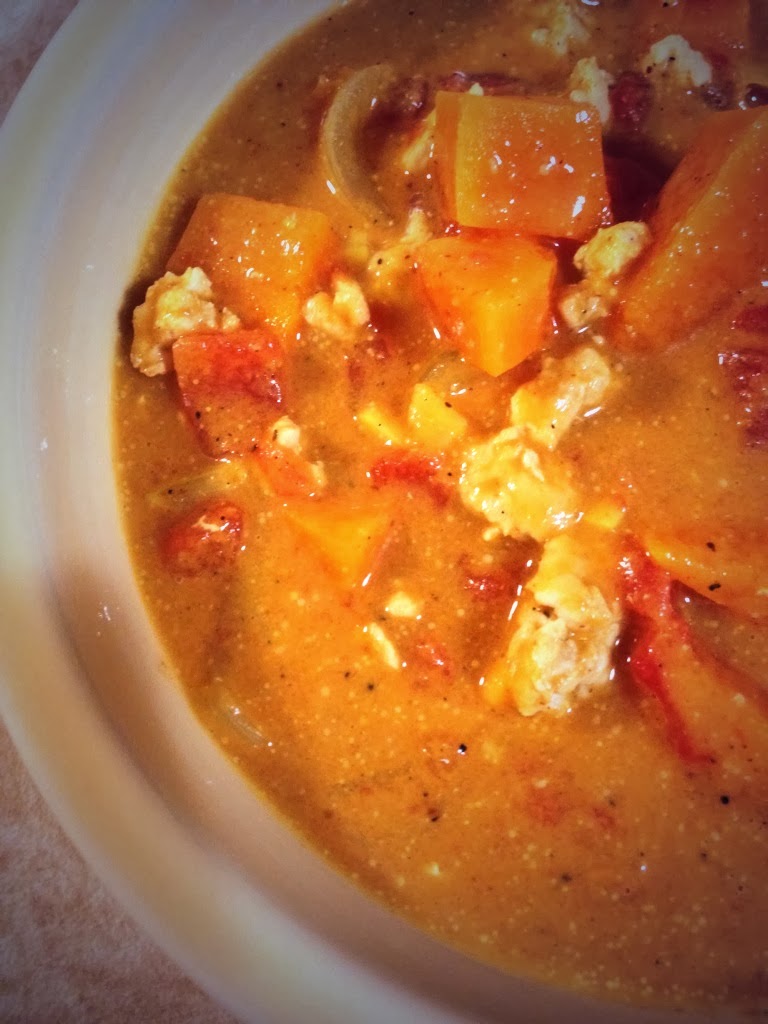
This is just an incredibly good stew. Of course, as a self-described peanut butter fanatic, I may be just a LITTLE biased, but I still think you might agree. ;) 

Recipe

Yield: makes about 7 (1 1/2 cup) servings

Ingredients
1 1/2 T extra virgin olive oil, divided
16-20 oz extra lean ground turkey
1 large yellow onion, sliced thinly
2 garlic cloves, minced
1 T peeled and minced fresh ginger root
1 T curry powder
1/2 tsp red pepper flakes
2 med-large sweet potatoes, peeled and diced
2 cups chicken broth
1 (28 oz) can petite diced tomatoes
1 tsp coarse salt
1 tsp freshly ground black pepper
1/2 cup natural peanut butter, smooth or chunky
1 (14 oz) can lite coconut milk
1 T brown sugar

Directions
In a large non-stick skillet, heat 1/2 T olive oil over medium-high heat. Add turkey and cook, breaking up clumps, until the turkey is cooked through. Season with 1/2 tsp salt and 1/2 tsp black pepper. Remove from heat. 

Heat remaining 1 T olive oil in a large pot over medium heat. Add onion and saute for about 6 minutes or until softened. Add garlic, ginger, curry, and red pepper flakes, and cook for 1 more minute.

Stir in sweet potatoes, chicken broth, tomatoes, and remaining 1/2 tsp of both salt and pepper; bring soup to a boil. Simmer, covered, for about 10 minutes.

Stir in the peanut butter and coconut milk. Add the cooked turkey and the brown sugar to the soup, stirring to combine. Bring the mixture to a simmer and cook another 5 minutes or so.

Nutrition
Like a lot of dishes I make, this one is pretty "all-inclusive" -- containing a balanced mix of carbohydrate, protein, and fat while also including a hefty dose of always-good-for-you vegetables. Unsurprisingly, this stew is quite satiating with fiber-rich sweet potatoes, high-protein turkey, healthy fat from peanut butter, as well as the stew liquid.  ;)

Each serving contains ~365 calories.

Pro Tips
Feel free to use the "lean" ground turkey vs the "extra lean"--I usually prefer the "lean" but could only find the "extra lean" at the time (although the "extra lean" still worked very well here). Also, if you'd prefer to use regular vs lite coconut milk, that's fine too. Just be aware that you'll be adding more calories to my per serving calculations.   

Enjoy ;)

{Recipe} spinach, mushrooms, walnuts, & Swiss with poached egg


A seemingly "different" combination here turns out to be a wildly savory dish. You get it all right here, folks--some of the best veggies, healthy fat, protein, and certainly not least, decadence. ;)  

Recipe

Yield: makes 4 servings

Ingredients
1 T extra virgin olive oil
3 shallots, sliced
3 garlic cloves, minced
~ 2-3 T fresh thyme leaves
~1/4 cup chopped fresh basil
1 (8 oz) package cremini (baby bella) mushrooms, sliced
2 T red wine vinegar
1/2 tsp coarse salt
1/2 tsp freshly ground pepper
3/4 cup coarsely chopped walnuts
1 (10 oz) bag baby spinach
2 oz Swiss cheese, shredded
8 cups water
2 T white vinegar
4 large organic eggs

Directions
Heat a large non-stick skillet over medium-high heat. Add olive oil. Add shallots and garlic; saute about 3 minutes. Add thyme, basil, and mushrooms; saute about 7 minutes, or until mushrooms are getting soft. Add in red wine vinegar, salt, and pepper, and cook until vinegar evaporates a bit.

Stir in walnuts; cook about 1 minute. Add spinach in intervals, letting each bunch wilt and then mixing in. Stir in cheese until just melted. 

Combine water and white vinegar in a large saucepan and bring to a simmer. Break each egg gently into pan. Cook 3 minutes. Remove eggs using a slotted spoon.

Spoon 1/4 of spinach & mushroom mixture onto each of 4 plates. Top each serving with 1 poached egg. 

Nutrition
Spinach, mushrooms, garlic, fresh herbs, shallots, walnuts, eggs, olive oil, & a little cheese. What else do I need to say? ;) 

Each serving contains ~350 calories.

Pro Tips
To round out the meal, serve this with some apple slices or baked sweet potato.  

Enjoy ;)

Tuesday, October 22, 2013

The Diet Guru Top 100

As frustrated as I get by diet gurus, it sure is nice to have a little comic relief interspersed into the madness. Hence, this post. Hey, I know the gurus get just as sick of science-based health professionals as we get of them--the exasperation surely goes both ways. And while it's fun to laugh a bit at the absurdity of diet guru tactics, the underlying seriousness of their actions remains and I do not take lightly to it.

You might be wondering what I consider to be a "diet guru." I wrote an earlier post on how to spot one, but here's another quick (though not all-encompassing) primer. A diet guru:

  • Cherry-picks and interprets data to support their beliefs
  • Sells and promotes unsubstantiated dietary supplements
  • Buys into and actively promotes unnecessary fad diets
  • Shuns dietary moderation in favor of extremes
  • Promotes treatments and therapies (ie cleanses, detoxing) with no published evidence to support them
  • Is highly dogmatic and asserts a one-size-fits-all diet approach
  • Relies heavily on testimonials and anecdotal evidence instead of peer-reviewed science
  • Offers quick-fix, simplistic solutions to complex problems like obesity
  • Purports to be promoting health, but upon closer inspection, is actually mercilessly marketing their diet book, products, services, and dietary supplements
  • Thrives on sensationalism and fear-inducing messages about food and nutrients
Now, if you are a diet guru or really like diet gurus, you may not enjoy the creativity that follows so much, but that's ok. As many diet gurus and their brainwashed followers have told me when I challenged their beliefs, "You're entitled to your opinion." Finally, diet gurus speaking the truth! There might be some hope after all.

Disclaimers: I'm sure diet gurus are nice people. I do not profess to be better than diet gurus. There are people who shouldn't eat gluten, etc. and I am not discounting you. I am discounting gurus who make narrow-minded and unnecessary (for the the majority of the populace) dietary prescriptions. I hope this list of songs doesn't age me too much. Inflammation and insulin-resistance are real and serious conditions. Coconut oil is cool but it's not a magic panacea. Low-carb diets are great if you like them and they work for you, but they aren't necessary for everyone. I really love fat so don't accuse me of promoting low-fat diets. Calories matter for energy balance but no one is saying all calories are qualitatively the same. Not all diet gurus are trying to milk you for money but many are. Give me an 8-hour road trip with my ipod and a cat and what do you think you're going to get?

The Diet-Guru Top 100  
  1. Hustler's Huckster's Anthem - Busta Rhyme
  2. Sexual Alternative Healing - Marvin Gaye
  3. Cocaine (i.e. Sugar, Wheat) - Eric Clapton
  4. Dancing Detoxing Queen - Abba
  5. Fallin' (For My BS) - Alicia Keys
  6. You Know I'm No Good (At Interpreting Research) - Amy Winehouse
  7. (This Cleanse Will Get) Better In Time - Leona Lewis
  8. (Your Metabolism Is) Dead and Gone - T.I. feat Justin Timberlake
  9. Dirty Diana Diet - Michael Jackson
  10. Empire Charlatan State of Mind - Jay Z feat Alicia Keys
  11. The First Cut (Into Your Wallet) Is the Deepest - Cat Stevens
  12. The Fear (Carbs & Insulin Mash-Up) - Lily Allen
  13. Gluten-Free Fallin' - Tom Petty & the Heartbreakers
  14. Hold On, We're Going Home Grain-Free - Drake
  15. (My Diet Is The) Holy Grail - Justin Timberlake
  16. Don't Matter (Calories Remix) - Akon
  17. I Will Wait Hate Calories - Mumford & Sons
  18. (Wheat Is) Killing Me Softly - Fugees
  19. If I Were A Boy Paleolithic Man - Beyonce
  20. It's My Life (n=1) - No Doubt
  21. Magic Stick Schtick - Lil Kim
  22. Naughty Girl Insulin - Beyonce
  23. Don't Do Me Like Eat That - Tom Petty & the Heartbreakers
  24. Please Don't Leave Believe Me - Pink
  25. Ready Research Or Not - Fugees
  26. Take It Diet Restrictions To The Limit - Eagles
  27. Your Body Is A Pseudoscience Wonderland - John Mayer
  28. Can't Fight This Feeling Primal Instinct - REO Speedwagon
  29. Against All Odds Grains - Phil Collins
  30. Sexy Scammin' And I Know It - LMFAO
  31. P.Y.T. P.F.C. - Michael Jackson
  32. Get Low-Carb - Lil Jon
  33. Blame It On The Rain Mainstream Medical Community - Milli Vanilli
  34. Nothing Compares To You My Diet Book - Sinead O'Connor
  35. She Blinded Me With Science Pseudoscience - Thomas Dolby
  36. Eternal Flame Inflammation - The Bangles
  37. A Whiter Shade of Pale Paleo - Procul Harum
  38. California Kerrygold Butter Love - 2pac
  39. Daydream Coconut Oil Believer - The Monkees
  40. Get Rich (Hawking Dubious Supplements) Or Die Tryin' - 50 Cent
  41. Girl You Know It's True Not Evidence-Based - Milli Vanilli
  42. Blurred Lines Professional Boundaries - Robin Thicke
  43. (Take My Advice And Hope You) Get Lucky - Daft Punk
  44. Won't Go Home Gluten-Free Without You - Maroon 5
  45. Papa Guru Don't Preach - Madonna
  46. I Get Lonely Leaky Gut - Janet Jackson
  47. Let Me Love Brainwash You - NeYo
  48. (I'll Give You) Something To Believe In - Poison
  49. Gin Supplements and Juice Juicing - Snoop Dogg
  50. Drop It Like It's Hot A Hot Cup of Bulletproof Coffee - Snoop Dogg feat Pharrell
  51. Another One Fad Diet Bites The Dust - Queen
  52. Baby Haha I Got Your Money - Ol' Dirty Bastard
  53. Bottoms Butter Up - Trey Songz
  54. Careless #CalorieMyth Whisper - George Michael
  55. Chasing Cars Carbs Away - Snow Patrol
  56. Emotions Hormones - Mariah Carey
  57. Grind (Your Upgraded Coffee Beans) With Me - Pretty Ricky
  58. Hips My Diet Book Don't Lie - Shakira
  59. Heat Of The Moment Inflammation - Asia
  60. I Like That (Insulin Hypothesis) - Houston
  61. My Boo Wheat Belly - Usher & Alicia Keys
  62. In Insulin The Air Tonight - Phil Collins
  63. Isn't It a Pity: The Poor Misunderstood Calorie - George Harrison
  64. Invisible Insulin Touch - Genesis
  65. Juicy Juicing - Notorious B.I.G.
  66. Let's Twist (The Science) Again - Chubby Checker
  67. Maneater Meateater (Caveman Mix) - Nelly Furtado
  68. Murder Was The Case (The Trial of Wheat & Sugar) - Snoop Dogg
  69. Nuthin' But A "G" (Grain Brain) Thang - Dr. Dre feat Snoop Dogg
  70. One And Only (Way To Eat) - Mariah Carey feat Twista
  71. Only Sixteen (Supplements You Need To Buy From Me) - Sam Cooke
  72. Pumped Up Kicks Claims - Foster The People
  73. Raspberry Beret Ketones - Prince
  74. Remember The Name: Taubes. Gary Taubes. - Fort Minor
  75. Return Of The Mack Atkins Diet Version 348.0 - Mark Morisson
  76. Rock The Casbah Smash The Fat - The Clash
  77. S & M (Superfoods & MiracleRemedies) - Rihanna
  78. The Search Is Over (Mine Is The Last Diet Book You'll Need!) - Survivor
  79. Say #SANE It Ain't So - Weezer 
  80. Send Me Some Lovin' Testimonials - Sam Cooke
  81. Sex Gluten Bomb - Tom Jones
  82. So Fresh So Clean (My Diet) - Outkast
  83. Space Paleo Cowboy - Steve Miller Band
  84. Still On My Brain GrainBrain - Justin Timberlake
  85. Tearin' Up My Heart Gut (Legumes Remix) - NSYNC
  86. We Be Burnin' (Inflammation Extended Version) - Sean Paul
  87. Where Do Broken Hearts Metabolisms Go? - Whitney Houston
  88. You Be Killin' Em (Wheat & Sugar!) - Fabolous
  89. Black & White (Thinking) - Michael Jackson
  90. Don't Stop Believin' (Me) - Journey
  91. Big Pimpin' Dupin' - Jay Z
  92. Bad (Carbs, Carbs, Carbs) - Michael Jackson
  93. Don't Forget About Us (In 3 Years When The Next Fad Diet Is In Place) - Mariah Carey
  94. How Many Licks Tricks (Does It Take For You To Finally Believe Me) - Lil Kim
  95. Call Me (Out) Maybe - Carly Rae Jepsen
  96. Magic LivinLowCarb Man - Heart
  97. Please Mr. Postman Strawman - The Marvelettes
  98. Green-Eyed Coffee Bean Extract Lady - Sugarloaf
  99. Dream- Delusionweaver - Gary Wright
  100. What's Love Science Got To Do With It - Tina Turner


Rock on gurus! 


Monday, October 21, 2013

{Recipe} Indian-spiced pumpkin soup with bacon


Rich, delicious, and comforting--this soup may be one of my new favorites. It's a cinch to prepare and every spoonful is a delight to the senses. Enjoy on a brisk autumn evening. ;)  

Recipe

Yield: makes about 6 (1 1/2 cup) servings

Ingredients
5 slices bacon
2 T olive oil
1 medium-large yellow onion, sliced or chopped
4 garlic cloves, minced
1 1/2 tsp curry powder
1 tsp garam masala
1/4-1/2 tsp cayenne pepper (depending on your heat preference)
1 tsp coarse salt
1 tsp freshly ground black pepper
4 cups chicken stock or broth
2 (15 oz) cans pumpkin
1/2 cup water
1/2 cup heavy whipping cream
Pumpkin seeds (pepitas) for garnish, optional


Directions
Cook bacon in a large saucepan or medium stock pot. Remove bacon from pan. Soak up all but about 1/2 tsp of the bacon grease with a paper towel and discard. Let bacon cool a bit and then break into pieces. 

Heat olive oil along with the remaining bacon grease in the pan. Add onions and cook until soft and just starting to turn brown. Add garlic and cook just until fragrant. 

Add bacon pieces, curry powder, garam masala, cayenne, salt, and pepper, stirring constantly until coated. Quickly add about 2 cups of the chicken broth. Stir in pumpkin and then add remaining 2 cups chicken broth and 1/2 cup water. 

Bring mixture to a boil and immediately reduce to a slight simmer, stirring occasionally. Stir in whipping cream.


Nutrition
This soup is packed with nutrient and fiber-rich pumpkin and contains just enough bacon to add some great flavor along with a little heavy whipping cream for satiety and a beautiful mouthfeel. 

Each 1 1/2 cup serving contains ~240 calories.

Pro Tips
Although it clearly shines in this recipe, canned pumpkin is one of my favorite "secret" ingredients in my tomato sauces, soups, and stews because it adds such a robust texture and brilliant color (not to mention boosts the nutritional profile) without too much distraction.  

Enjoy ;)

Wednesday, October 16, 2013

Wise Words On Our Quest to Healthy, Balanced Living

Healthy, balanced living is about so much more than what you do or don't put in your mouth. I find words to be incredibly therapeutic in the never-ending quest to find balance, be healthy in both body and mind, and to live with purpose. For me, wise words can provide a breath of fresh air and feeling of relief, serve as a reminder of our actual brevity in the larger scheme of things, give me some much needed comic relief during tense times, and can even push me to work harder towards my goals.  

A thoughtful and wise platitude, a simple and straight-up common sense quote, or a funny and true thought about the perils of the human condition that gives you pause, gets your brain gears turning, tugs at your heart, or maybe even helps motivate you to some action, is a beautiful thing.

So, naturally, I LOVE good quotes! ;) While I have a plethora of my favorites stashed away, I want to hear your favorite quotes and sayings related to the banalities of life in general, balanced eating, living healthy in both body and mind, making changes, achieving goals, working through the hard times, or being persistent when it matters most.


Think of this post as merely a quote repository--drop off your best and take a minute to refresh yourself with what others have shared. I’ve started it off with a *few* of my favorites. ;) 

"The time came when to remain a bud was more painful than to risk to blossom."
 --Anais Nin

"The most terrifying thing is to accept oneself completely." 
--Carl Jung

"You can't expect to change your life without a few minor adjustments."

"Comparison is the thief of joy."

"If you're not hungry enough to eat an apple, then you're not hungry."
 --Old wive's tale 

"At birth we come. At death we go. Bearing nothing." 

"Health, contentment, and trust are your greatest possessions, and freedom your greatest joy." 

"To change your life: start immediately; do it flamboyantly; no exceptions." 
--William James 


"Nobody is getting out of here alive." 

"Cellulite is a telltale sign that life is a crapshoot."

"He who wants a result must accept the means of obtaining it."
 --Leo Tolstoy 

"Accept your irrelevance."

"Yes, the world may aspire to vacuousness, lost souls mourn beauty, insignificance surrounds us. Then let us drink a cup of tea."
 --Murial Barbery 

"People are too durable, that's their main trouble. They can do too much to themselves, they last too long."
 --Bertolt Brecht

"Eat well, exercise, and die anyway." 


Now it’s your turn--share your best quote related to this wild life or to healthy living in the comment section!